
Is Dysport Right for You? Eligibility and Contraindications in Gainesville, FL
Fine lines have a way of showing up when you least expect them. You might notice a crease between your eyebrows while getting ready for work or see that your frown lines remain visible even after your face relaxes. For people considering cosmetic injectables, Dysport is one option worth exploring. But before scheduling an appointment, it’s important to understand whether the treatment suits your health, skin concerns, and expectations.
If you’re considering Dysport in Gainesville, FL, knowing who qualifies for treatment and which medical conditions may make it unsuitable can help you make a safer, more informed decision.
What Is Dysport and How Does It Work?
Dysport is an FDA-approved injectable treatment containing abobotulinumtoxinA, a type of botulinum toxin. It temporarily reduces activity in targeted muscles, helping soften expression lines caused by repeated facial movements.
In cosmetic treatments, Dysport is FDA-approved for moderate to severe glabellar lines, commonly called frown lines, between the eyebrows in adults younger than 65.
When you squint, concentrate, or frown, certain facial muscles contract. Over time, these repeated movements can create lines that remain noticeable even when your face is relaxed. Dysport works by temporarily reducing muscle activity in the treated area.
Results may begin appearing within a few days, although the timing varies. Cosmetic effects commonly last around three to four months.
Who Is a Good Candidate for Dysport?
Not everyone who notices facial wrinkles needs injectable treatment. Some people are comfortable with their natural expression lines, while others prefer to soften them.
Dysport may be appropriate for adults who are generally healthy, have moderate to severe frown lines, and want a temporary, nonsurgical treatment.
A suitable candidate typically has realistic expectations. Dysport can soften certain muscle-related wrinkles, but it cannot eliminate every line, correct loose skin, or replace procedures designed to address facial volume loss.
Your provider will also consider your facial anatomy, muscle movement, medical history, and previous experience with injectable treatments.
When Should You Avoid Dysport?
Understanding contraindications is one of the most important parts of deciding whether Dysport is appropriate.
Allergies to Botulinum Toxin Products
Dysport should not be used if you have a known allergy to abobotulinumtoxinA, another botulinum toxin product, or any ingredient in Dysport. A history of allergy to cow’s milk protein is also a contraindication because Dysport contains trace amounts of milk protein.
Infection at the Injection Site
If you have an active infection where the injections would be administered, treatment should be postponed until the infection has resolved.
Pregnancy and Breastfeeding
There is insufficient information to establish Dysport’s safety during pregnancy or breastfeeding. For elective cosmetic treatment, providers generally recommend waiting and discussing the timing with your healthcare professional.
Neuromuscular Disorders
People with conditions such as myasthenia gravis, Lambert-Eaton syndrome, or amyotrophic lateral sclerosis (ALS) may face an increased risk of serious side effects, including muscle weakness, swallowing difficulties, and breathing problems.
These conditions require careful medical evaluation before any botulinum toxin treatment is considered.
Medical Conditions and Medications to Discuss
Even when a medical condition is not an absolute contraindication, it may affect treatment safety.
Tell your Gainesville provider if you have previously experienced difficulty swallowing or breathing, significant facial muscle weakness, or unusual reactions to injectable treatments.
Certain medications may also increase the effects of Dysport. These include some muscle relaxants, aminoglycoside antibiotics, and medications that interfere with neuromuscular transmission.
Blood-thinning medications can increase the likelihood of bruising. However, you should never discontinue prescribed medication simply to prepare for cosmetic injections without speaking to the clinician who prescribed it.
It’s also important to disclose any botulinum toxin injections you have received recently, including Botox, Xeomin, Jeuveau, or Daxxify.
What Happens During a Dysport Consultation in Gainesville, FL?
A consultation is more than a quick conversation about wrinkles.
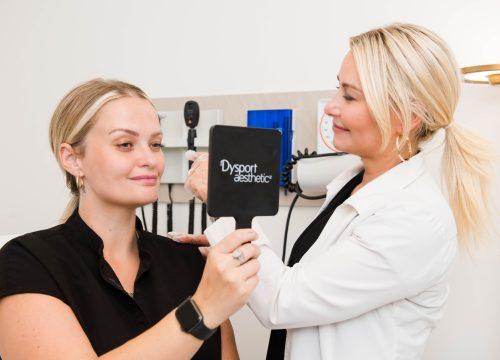
Your provider should ask about your medical history, medications, allergies, and previous cosmetic procedures. They may also examine how your facial muscles move when you smile, squint, or frown.
This helps determine whether Dysport is appropriate, which muscles might require treatment, and whether your desired results are realistic.
You should also have an opportunity to discuss possible side effects, treatment costs, expected results, and the qualifications of the person administering the injections.
Choosing a properly trained, licensed medical professional is particularly important because inaccurate injection placement can lead to unwanted muscle weakness or eyelid drooping.
Possible Side Effects and Risks
Common side effects of cosmetic Dysport injections can include headache, injection-site discomfort, swelling, and eyelid drooping. Some people may experience temporary bruising or irritation.
Rarely, botulinum toxin effects can spread beyond the injection area, causing symptoms such as generalized muscle weakness, difficulty swallowing, changes in speech, or breathing problems.
These symptoms require immediate medical attention. Serious reactions can occur hours to weeks after an injection.
How Long Does Dysport Recovery Take?
Most people can return to ordinary daily activities shortly after treatment, although mild redness, swelling, or tenderness may occur.
Your injector may recommend avoiding rubbing the treated area immediately afterward and following individualized aftercare instructions.
Unlike surgical procedures, Dysport generally does not require an extended recovery period. Still, you should plan treatment with enough time to assess the results rather than expecting an immediate change.
Frequently Asked Questions
1. What is the minimum age for Dysport treatment?
Cosmetic Dysport is approved for adults aged 18 to 64 for moderate to severe glabellar lines. Your provider must still determine whether treatment is appropriate for your individual needs.
2. Can I get Dysport if I have sensitive skin?
Sensitive skin alone does not automatically prevent treatment. However, active infections, allergies, and certain skin conditions should be evaluated before injections.
3. Is Dysport safe if I have received Botox before?
Previous Botox treatment does not necessarily prevent Dysport use. Tell your provider when you last received Botox or any other botulinum toxin product so they can evaluate treatment timing and safety.
4. How do I know if Dysport is better than Botox for me?
Both treatments temporarily relax targeted muscles, but they differ in formulation and dosing. A qualified injector can explain which option may be more suitable based on your facial anatomy, treatment history, and goals.
Final Thoughts
Deciding whether Dysport is right for you involves more than wanting smoother skin. Your medical history, allergies, medications, facial anatomy, and expectations all matter.
For residents considering Dysport treatment in Gainesville, FL, a thorough consultation with a qualified medical professional is the best starting point. Understanding both the benefits and limitations helps you approach cosmetic treatment with confidence while keeping your health and safety the priority.